

Ego Camera – Head-Mounted Stereo Vision Tool for Robot Learning Data Collection
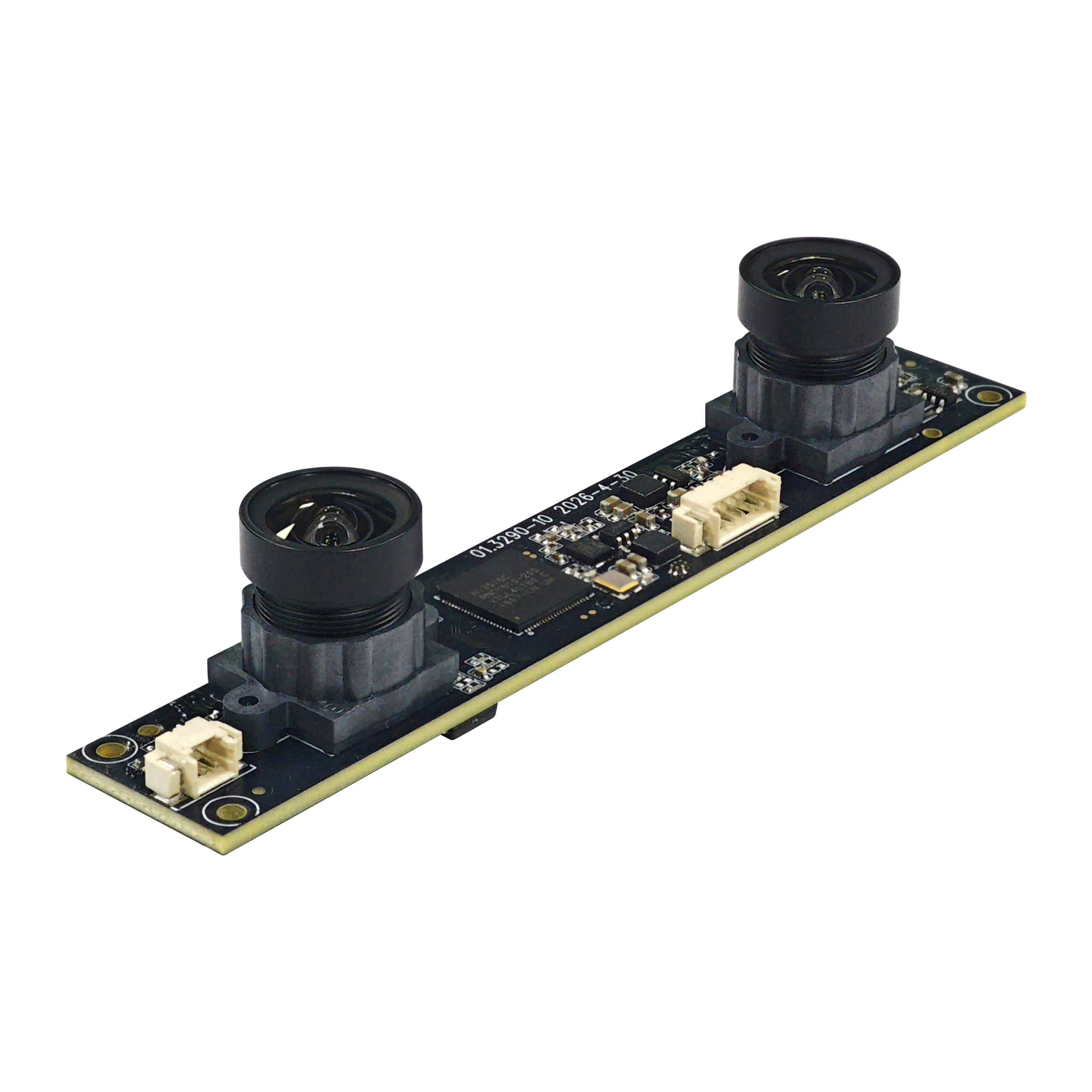
A head-mounted binocular camera module built exclusively for human demonstration data capture. It delivers hardware-synchronized, factory-precalibrated egocentric raw sensor data to power imitation learning and embodied AI pipelines.
The Data Bottleneck Plaguing Physical AI
By 2026, a universal consensus has formed across the robotics industry: data is the critical bottleneck preventing scalable physical AI deployment. Large language models train on trillions of text tokens, yet embodied AI systems have access to less than one ten-thousandth of that volume in real-world physical interaction footage.
This disparity poses a massive roadblock to progress. Leading robotics labs estimate that training advanced manipulation policies requires 100 million to 1 billion hours of egocentric first-person footage within the next 2–3 years. Even for a single discrete manipulation task, training datasets demand between 100,000 and 1 million hours of recorded human activity.
Industry practitioners agree that egocentric data capture delivers the highest scalability. Instead of relying on costly teleoperation rigs that cost tens of thousands of US dollars per unit, research teams and data vendors now leverage lightweight head-mounted cameras to capture demonstration footage while humans perform natural daily tasks.
This shift is already visible in real-world deployments. In April 2026, viral footage showed thousands of textile workers across the Delhi NCR region of India wearing compact head-mounted cameras manufactured by Egolab.AI. These operators now generate massive egocentric video datasets to train next-generation humanoid robots.
Why Egocentric First-Person Data Is Indispensable
Robots must perceive the exact visual input humans see to replicate human motor skills accurately. A wave of research published between 2025 and 2026 validates the transformative value of egocentric datasets:
1.
HumanEgo Just 30 minutes of human egocentric video per task achieves a 92.5% average success rate on real-world manipulation tasks, enabling zero-shot skill transfer from humans to robots.
2.
EgoMimic Integrating human demonstration data boosts task performance by 34% to 228% compared to robot-only training data. One hour of supplementary human hand footage delivers far greater model improvement than one hour of additional robot self-collected data. Hybrid human-robot datasets also yield superior training and deployment performance, including footage from long-range teleoperation workflows.
3.
EgoScale Developed by NVIDIA researchers, this framework leverages a diverse dataset of 20,854 hours of human egocentric footage to scale dexterous manipulation capabilities across general tasks.
4.
Open-AoE Releases a 2,000-hour egocentric video dataset paired with synchronized hand kinematics and atomic action annotations.
5.
Cutting-edge frameworks Cutting-edge frameworks including EgoGuide and EgoLive further streamline robot-free demonstration capture and large-scale egocentric dataset generation.
Despite this industry momentum, hardware solutions for high-quality egocentric capture remain fragmented. Researchers and data teams are forced to piece together consumer action cameras, AR eyewear, and custom-built rigs—compromising synchronization precision, calibration consistency, and long-wearing comfort in the process.
Ego Camera Product Overview
The Ego Camera is a head-mounted binocular stereo camera module engineered from the ground up for egocentric data capture in robot learning, embodied AI, and imitation learning workflows.
Unlike repurposed consumer action cameras adapted for research use, the Ego Camera is purpose-built for academic and industrial robotics pipelines. It outputs clean, hardware-synchronized, factory-precalibrated raw sensor data out of the box with zero post-processing setup required.
Core Technical Specifications
| Specification | Details |
|---|---|
| Image Sensors | Dual 2MP Global Shutter CMOS Sensors |
| Horizontal Field of View (HFOV) | 60–65°, matching natural human visual range |
| Shutter Technology | Global Shutter; eliminates rolling shutter distortion during high-speed motion |
| IMU Module | 6-axis ICM-26888-P (3-axis accelerometer + 3-axis gyroscope), 200–500 Hz sampling frequency |
| Synchronization Mechanism | Hardware GPIO trigger; frame-IMU synchronization error < 10 microseconds |
| Timestamping | Hardware-level unified nanosecond timestamps for every image frame and IMU reading |
| Wired Interface | USB 2.0 Type-C, UVC compliant; cross-platform SDK support for Windows, Linux, and ROS |
| Wireless Deployment | Onboard WiFi + MicroSD card storage; footage prioritized to local storage, auto cloud upload on network reconnection |
| Mounting Standard | 1/4″-20 threaded mounting holes, compatible with aftermarket head straps and custom fixtures |
| Calibration | Factory pre-calibrated stereo intrinsic/extrinsic parameters and camera-IMU transforms, permanently stored in onboard flash memory |
Why Global Shutter Is Non-Negotiable for Robot Learning
Consumer cameras rely on rolling shutter sensors that expose pixel rows sequentially. Fast human hand movements—an ever-present element in demonstration footage—create severe rolling shutter artifacts known as the “jelly effect”: skewed object edges, geometric warping, and unreliable feature tracking.
These distortions cripple robotics pipelines. VIO frontends, visual SLAM algorithms, and imitation learning policies cannot tolerate unpredictable inter-frame feature shifts, which drastically degrade model generalization and real-world task performance.
The Ego Camera’s global shutter sensor exposes all pixels simultaneously in a single capture window. Every frame corresponds to an unambiguous rigid-body pose with zero geometric distortion—a mandatory standard for rigorous robotics research and commercial model training.
As the industry pursues ever-larger egocentric datasets (such as EgoLive’s multi-thousand-hour archives of high-fidelity stereo footage spanning real household and industrial tasks), demand for distortion-free, frame-accurate capture hardware continues to rise.
Hardware Synchronization: The Divide Between Low-Quality and Production-Grade Training Data
When humans execute manipulation sequences—reaching, grasping, placing objects—robot policies require precise temporal alignment between visual hand movement and inertial body motion. Even a few milliseconds of desync between camera frames and IMU readings contaminates entire training datasets. Software-based timestamp alignment (soft synchronization) accumulates drift over recording sessions and fails to meet precision standards for high-fidelity VIO and imitation learning pipelines.
The Ego Camera uses a dedicated GPIO pulse to trigger both binocular sensors and the IMU simultaneously, delivering synchronization accuracy better than 10 microseconds. Every image frame and inertial sample carries a shared hardware timestamp—meeting the strict temporal requirements of mainstream VIO frameworks including VINS-Fusion and OpenVINS.
Flagship annotated egocentric datasets such as Open-AoE rely on this tier of hardware sync to deliver synchronized text labels, MANOS-based hand pose estimation, camera trajectory logs, and temporally localized atomic action tags—all core deliverables the Ego Camera is designed to support natively.
Factory Pre-Calibration: Eliminate Time-Consuming On-Site Calibration
Manual calibration represents one of the most resource-intensive bottlenecks for multi-camera data capture workflows. Tuning intrinsic lens parameters, stereo extrinsic offsets, and camera-IMU transform matrices demands specialized optical equipment, technical expertise, and hours of labor per device.
The Ego Camera eliminates this workflow entirely. Every unit undergoes full end-to-end calibration before leaving the factory. All critical parameters—focal length, principal point coordinates, distortion coefficients, stereo extrinsics, and camera-IMU transforms—are permanently written to onboard flash memory.
Research teams and data vendors can begin recording valid footage within five minutes of unboxing, with no checkerboard targets, calibration rigs, or half-day calibration sessions required. Modern high-standard egocentric datasets mandate factory-precalibrated camera hardware—a specification built directly into every Ego Camera unit.
Two Deployment Modes, Single Unified Hardware Platform
1. USB Wired Mode
Connect to laptops or workstations for real-time live preview and low-latency recording. Optimized for controlled laboratory environments where researchers validate data quality on-demand. Fully supported by cross-platform SDKs compatible with Windows, Linux, and ROS robotics frameworks.
2. WiFi + MicroSD Card Offline Mode
Untethered recording for large-scale distributed data collection. All captured footage writes first to local MicroSD storage to prevent data loss during network outages; once connectivity is restored, files auto-sync to remote cloud servers or on-premise data warehouses. Ideal for multi-scene capture across kitchens, manufacturing workshops, offices, and other real-world environments to generate thousands of hours of demonstration footage.
Structured Raw Data Output (No Onboard AI Processing)
The unit outputs unaltered, pure raw sensor data with no built-in image smoothing, auto-annotation, or on-device AI inference—preserving full raw fidelity for integration into custom training pipelines:
left_video.mp4/right_video.mp4: Synchronized stereo binocular video streamsimu_6axis.csv: 6-axis inertial measurement logs (accelerometer + gyroscope) tagged with hardware timestampstimestamps_ns.txt: Unified nanosecond hardware timestamps for all image frames and IMU samplescalibration_params.yaml: Factory-baked intrinsic, extrinsic, and camera-IMU calibration transforms
Target User Segments
Embodied AI & imitation learning academic research labs
Humanoid robot and dexterous manipulation robotics manufacturers
Specialized data service providers generating training datasets for physical AI clients
R&D teams building VIO and visual SLAM algorithms
Robotics teams scaling large-scale egocentric demonstration data collection workflows
Post time: Aug-11-2026


